

Canola is an important part of producers’ crop rotation programmes and the sustainable production of crops in the Western Cape. Blackleg (Leptosphaeria maculans/Phoma lingam) is one of the diseases in canola that can lead to significant yield losses. When the fungus overcomes the resistance of cultivars, losses of 50% to 90% can occur.
Blackleg in canola: Early control is the secret to success
Life cycle of blackleg
Various factors can contribute to the development of the disease. The main source of primary infection is canola residue. However, the inoculum can also be transmitted through seed (see diagram 1). The impact between seasons due to seed is small compared to the inoculum from infected stubble from previous years.
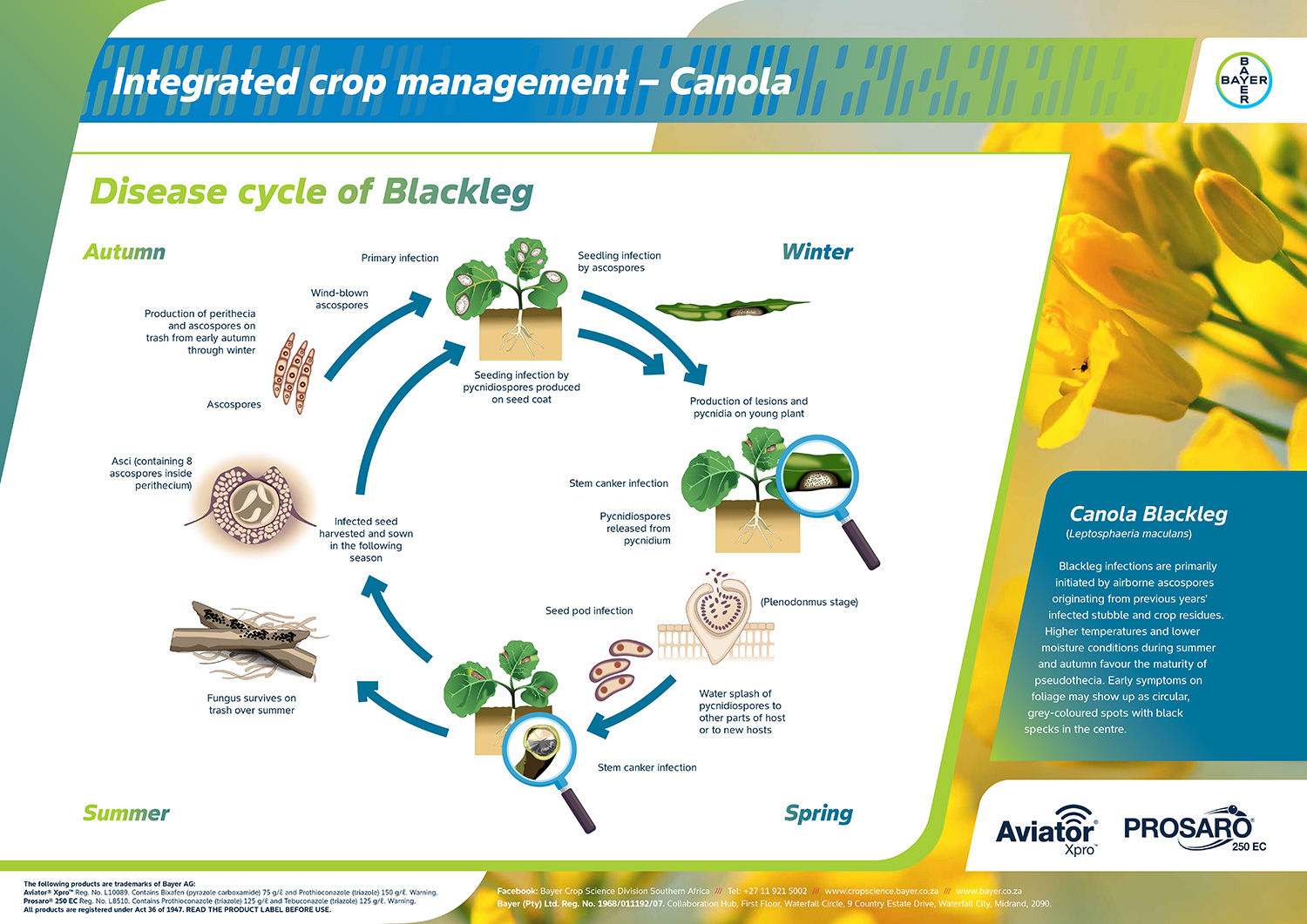
Diagram 1: Disease cycle of blackleg.
Seasonal conditions play a major role in the level of infection that can be expected. Rain and cool weather stimulate spore development, and moist conditions cause the release of blackleg spores from canola stubble on the soil surface. Blackleg spores are mainly spread by wind, with the highest percentage occurring within 500 metres of any canola stubble. Spores are released from the stubble until they completely decompose. It can take up to four years for the stubble to break down (see diagram 2).
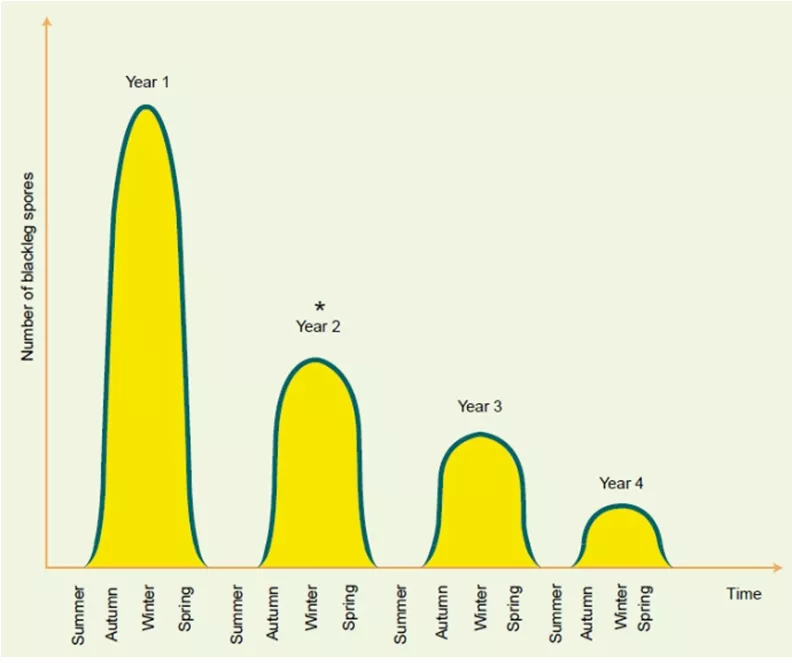
Diagram 2: The release of spores over four seasons in Western Australia.
(https://www.agric.wa.gov.au/canola/managing-blackleg-canola)
The blackleg pathogen can infect the plant at any stage, but early seedling infection has the greatest chance of developing into crown cankers later in the season, which has the greatest impact on yield loss.
Type of infection: leaf and crown canker
Leaf infection has almost no impact on yield, but this is where the pathogen grows from the lesion on the seedling leaf through the leaf petiole and down the stem to the crown of the seedling, forming crown cankers later in the season.
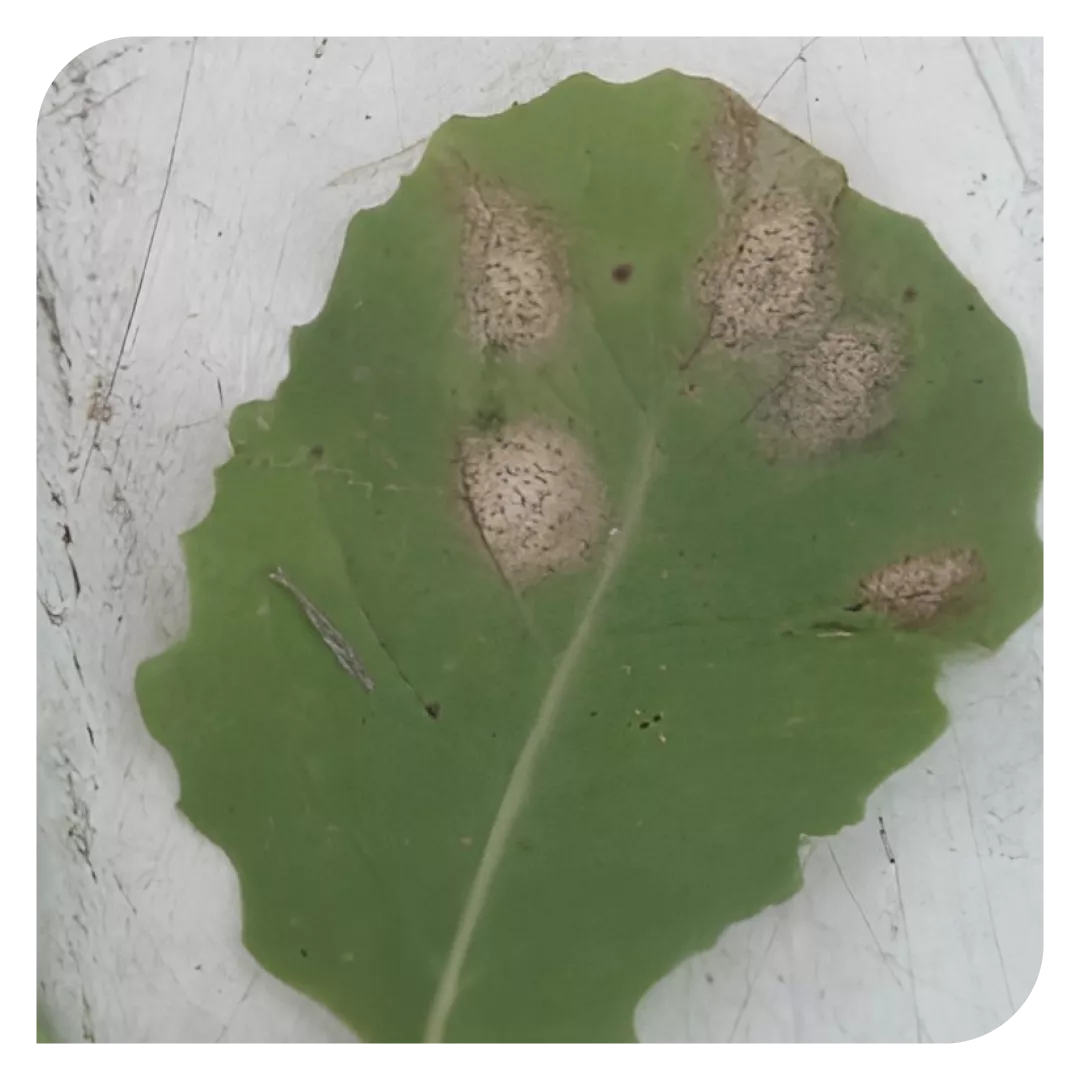
Figure 1: Blackleg lesion on a leaf.
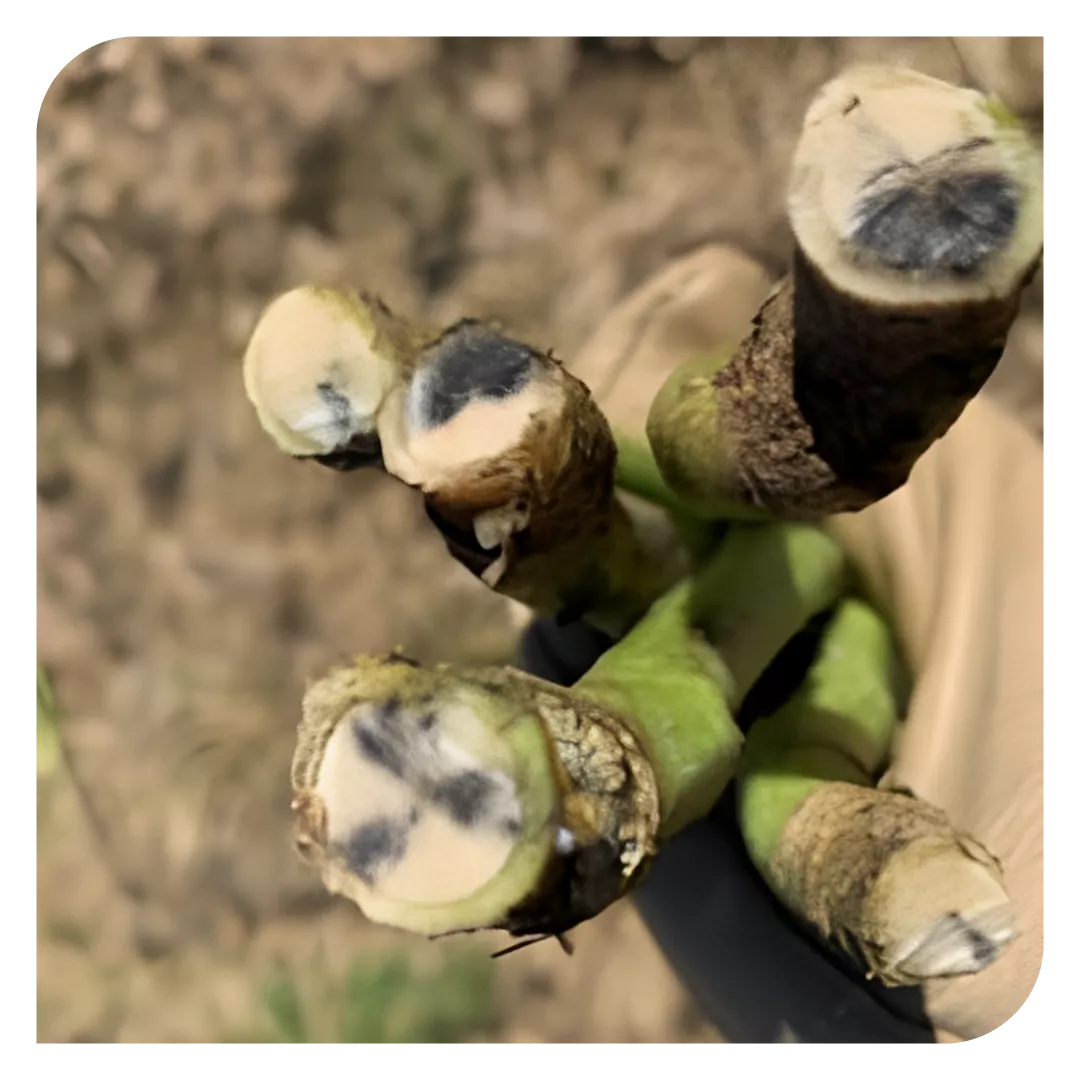
Figure 2: Blackleg infection in the stem.
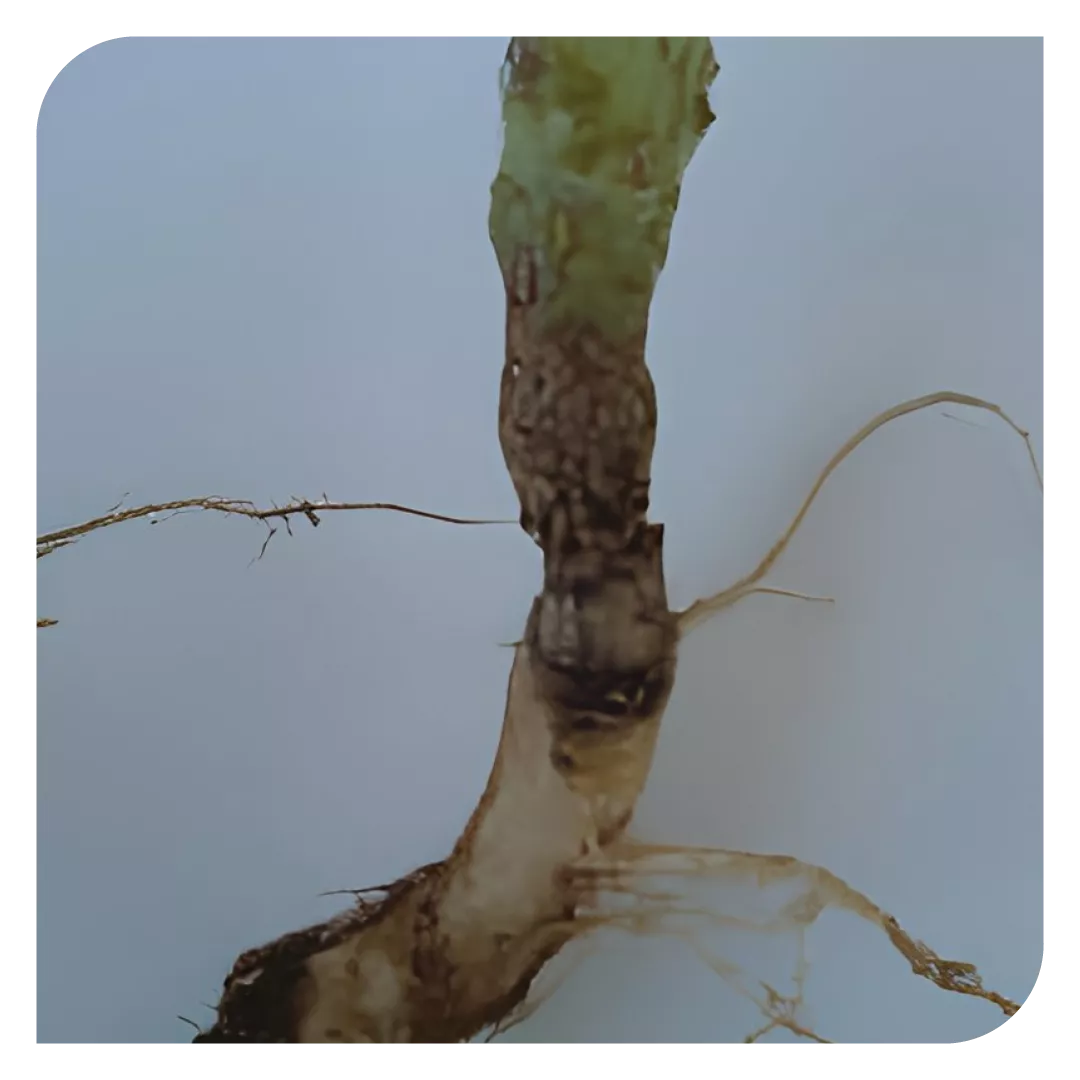
Figure 3: Crown canker in canola can lead to the death of the plant.
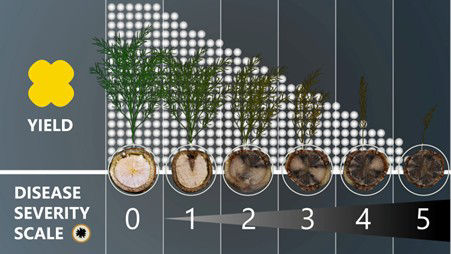
In this research, Hwang and Strelkov found a negative correlation between the level of blackleg infection and yield. Each unit increase on a scale of one to five can result in a yield loss of 17.2%.
The severity of blackleg infection is determined on a scale from zero to five, where zero represents no infection and five indicates plant death (Canola Council of Canada website: blackleg.ca).
Blackleg Upper Canopy Infection (UCI)
If spores are released later in the season from the stubble, this leads to Upper Canopy Infection (UCI). Blackleg can potentially affect all parts of the canola plant. UCI is a collective term used to describe infection of the flowers, stem, pods, and side branches.
UCI has increased in Australia over the past few years and may be associated with earlier flowering due to earlier planting of cultivars and faster crop development during warmer autumn and winter conditions. UCI has also been observed in South Africa.
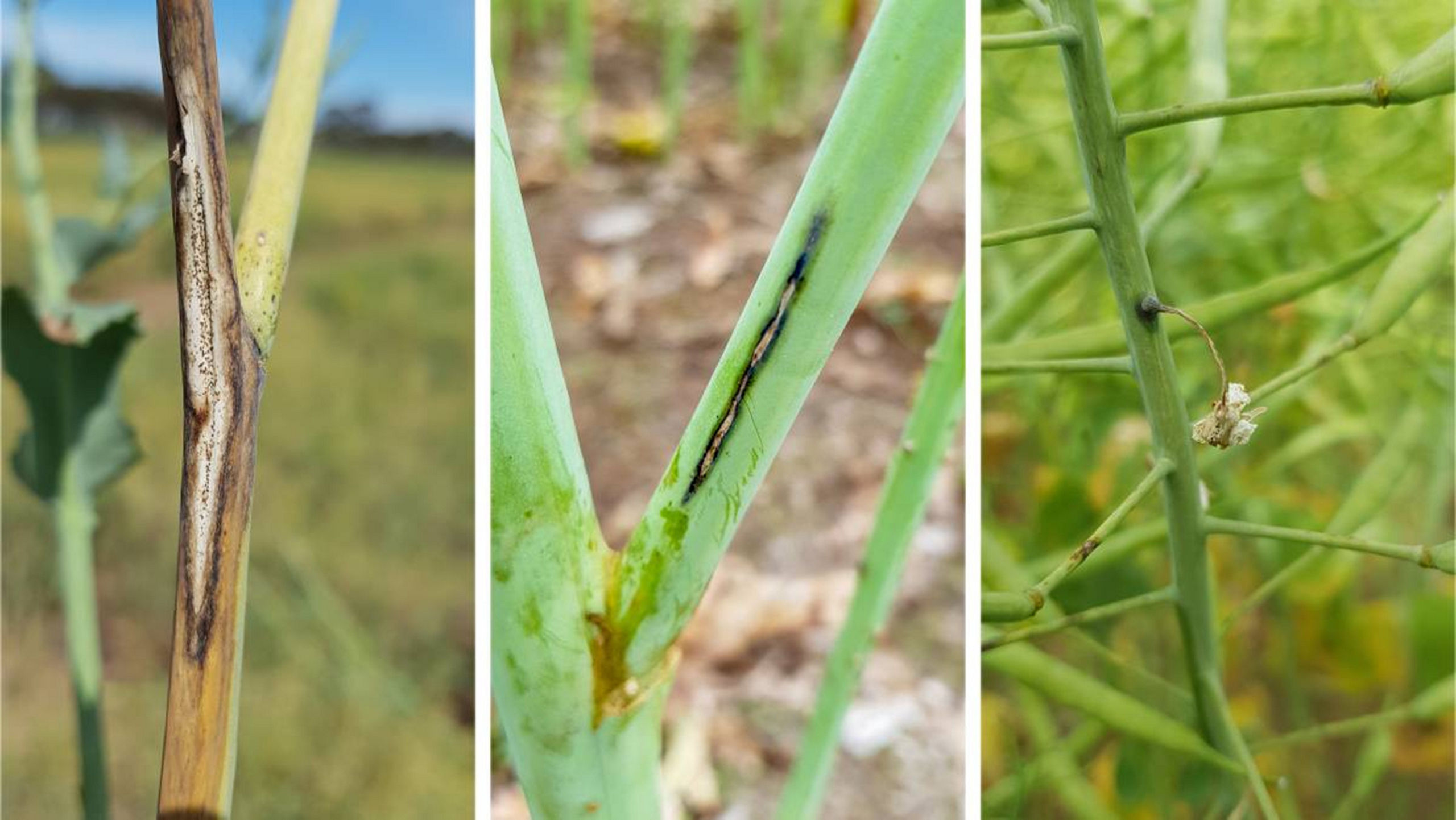
Figure 4: Typical symptoms of canopy infection. Photos by Steve Marcroft.
There are also indications of delayed and prolonged release of blackleg spores in systems where stubble is retained and where more canola is planted. However, many questions remain about UCI and the factors contributing to its development. It is still under investigation.
Research has shown that yield losses can be up to 30%. The effect on yield depends on the timing of infection and which part of the plant is infected. Flower loss due to infection of flowers or peduncles does not have as large an impact on yield reduction, as the canola plant can compensate by producing more flowers.
However, when the fungus infects associated side branches, seed set and grain filling of pods can be affected. Infection of pods or peduncles after pod formation can result in major harvest losses. Infected side branches and infection of the upper part of the main stem can affect all developing flowers and pods above the infection point, reducing pod and seed set and leading to smaller seeds.
Severe infections can cause stems and side branches to break and lead to premature ripening, which results in pod shattering. This can also make it difficult to determine the correct cutting stage due to differences between plants affected by blackleg and healthy plants.
Physical damage caused by insects, hail, or frost allows the fungus to enter the plant and can result in UCI symptoms on the main stem and pods.
Fungicide control for Blackleg – Crown canker
Fungicide control should be applied when the 4–6 leaf stage is reached. The reason for early spraying is that infection can occur early, leading to crown cankers later in the season.
Fungicide control of UCI
If UCI occurs, fungicides used for Sclerotinia control have been found to be effective in reducing UCI infection pressure. Application of Prosaro® and/or Aviator® Xpro™ for Sclerotinia at approximately 30% flowering can also provide protection against UCI blackleg infection during early flowering.
Resistance management of chemical groups from Australia for Blackleg and Sclerotinia
Group 3 – Demethylation Inhibitors (DMI)
Group 7 + 3 – Succinate Dehydrogenase Inhibitor (SDHI) + Demethylation Inhibitor (DMI)
Group 11 – Quinone Outside Inhibitor (QOI)
Group 11 + 3 – Quinone Outside Inhibitor (QOI) + DMI
· Fungicides should be used preventatively or at the onset of disease. If the disease is already established, optimal control cannot be expected, and the likelihood of selecting for resistance increases. Sclerotinia applications should be done during the flowering period. Sclerotinia fungicide applications can place selection pressure on blackleg populations.
· In high-pressure environments, integrated management should be applied to reduce fungicide resistance. This includes planting canola 500 metres away from the previous year’s stubble, using resistant cultivars (rotate cultivars with different resistance genes), using alternative fungicides from different groups, and applying stubble management.
· The risk of developing fungicide resistance can be reduced by alternating fungicide groups for blackleg management as mixtures, co-formulations, or group rotations.
· If a Group 7 seed treatment with foliar activity for blackleg is used (as indicated on the label), the fungicide used as a spray between the 4–6 leaf stage should not be a Group 7 fungicide.
· Do not use more than two fungicides per season that fall within Group 7.
· Do not apply more than two consecutive applications of Group 3 fungicides.
· Do not use more than ONE fungicide from Group 11 per season.
· If a second Sclerotinia application is required, the second fungicide must be from a different fungicide group.