Win the fight against Lolium with Sakura®

FROM COMPETITION TO CONTROL: Win the fight against Lolium with Sakura®

Win the fight against Lolium with Sakura®

Controlling grass weeds in cereal crops remains one of the biggest challenges for wheat farmers. Italian ryegrass (Lolium perenne var. multiflorum), together with related species and hybrids often grouped as the “Lolium complex”, is widely recognised as one of the most aggressive competitors in cereals like wheat and barley. If not effectively managed, these weeds can cause severe yield losses, often exceeding 60% in heavily infested fields.


SMALL WEED, BIG LOSS: THE IMPACT OF LOLIUM

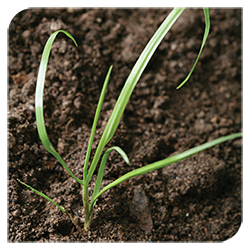
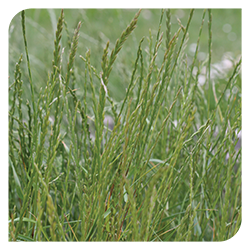
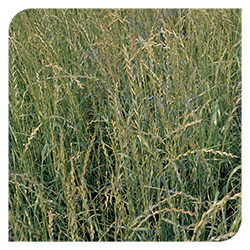
Lolium can have a significant impact on wheat production by competing with the crop from the very start of the growing season. One of the main ways it reduces yield is by limiting tillering, which means the wheat plant produces fewer fertile shoots and spikelets. At the same time, Lolium competes aggressively for key nutrients like nitrogen and potassium, often absorbing them more efficiently than wheat and adapting quickly to changing environmental conditions.

This competition not only reduces growth but can also affect the quality of the grain, altering its chemical composition by increasing protein levels and changing important properties such as reducing power and phenolic content. Lolium also mimics the crop in terms of germination timing, vigorous growth, and biochemical phytotoxicity, making it a fierce competitor for your wheat plants.


Update-Article-Images-01.png Update-Article-Images-012.pngWebsite-Update-Article-Images-013.png

STOP WEED IN ITS TRACKS WITH SAKURA®

When it comes to controlling Lolium in wheat, Sakura® stands out as a tried and trusted pre-emergence herbicide solution that removes the guesswork from weed management. What makes Sakura® particularly unique is its advanced formulation, powered by pyroxasulfone.

Its strong efficacy lies in its ability to act early, preventing and delaying Lolium’s emergence so that the crop can establish without competition during the most critical growth stages. This early advantage is key in protecting yield potential, especially given Lolium’s widespread resistance to many other competitive post-emergence herbicides.

In a 2024 trial evaluating Sakura® for Lolium control, Sakura® delivered an average of 7% better control than the competitor. In 2025, three additional trials confirmed these results, with Sakura® providing 3% better control than one competitor and 8% better than another, and 25% more control compared to untreated fields.

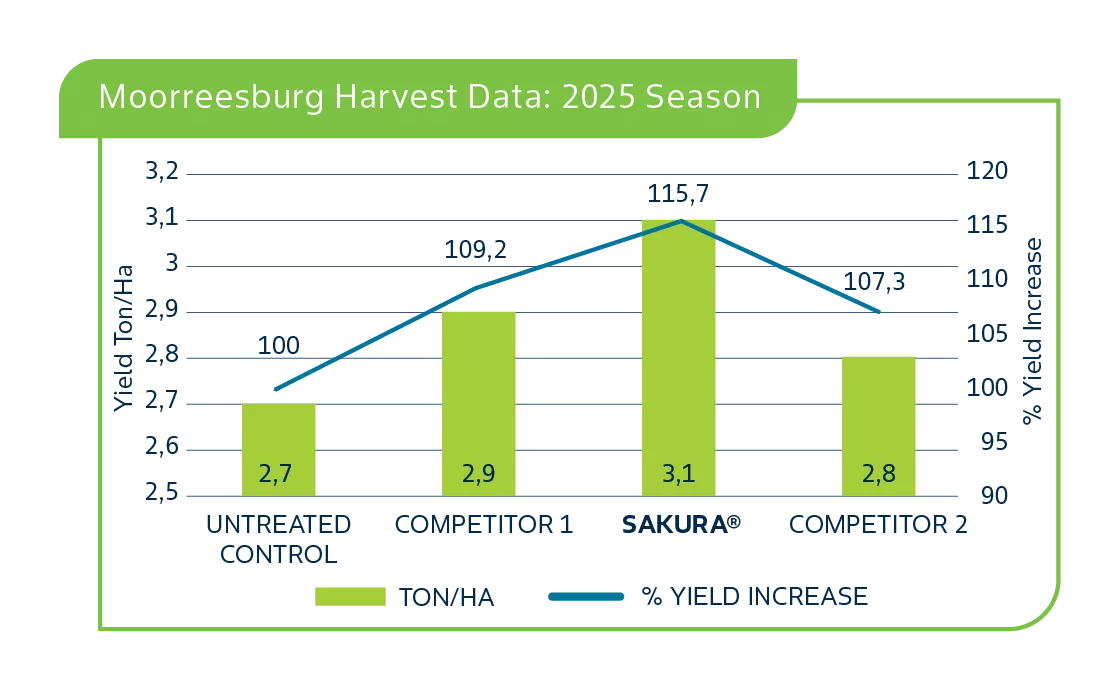
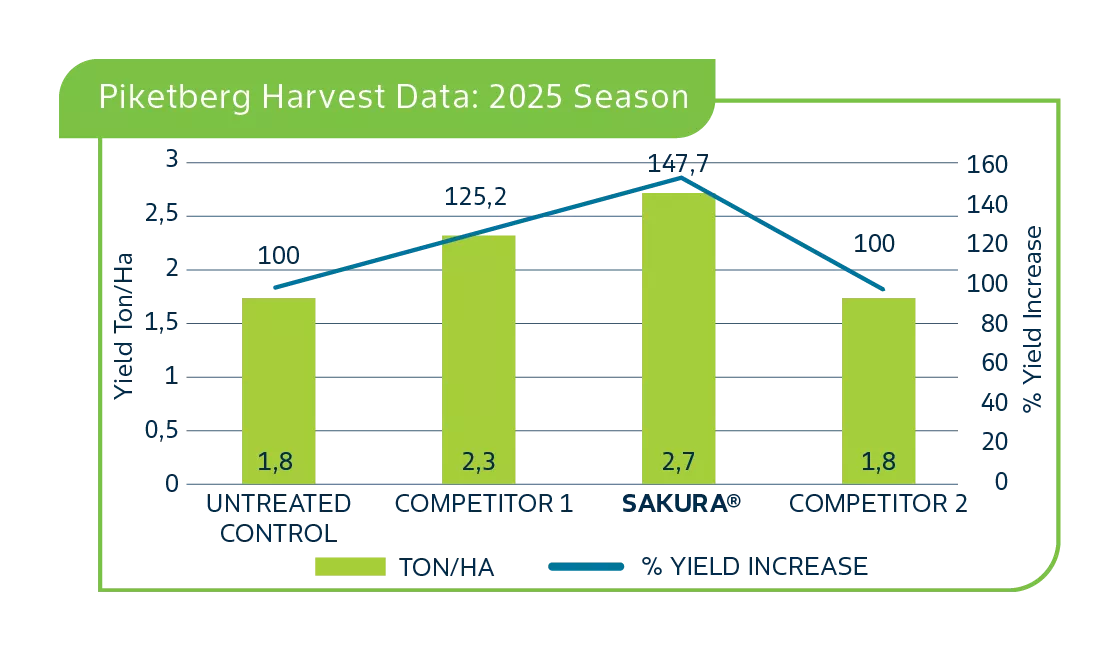
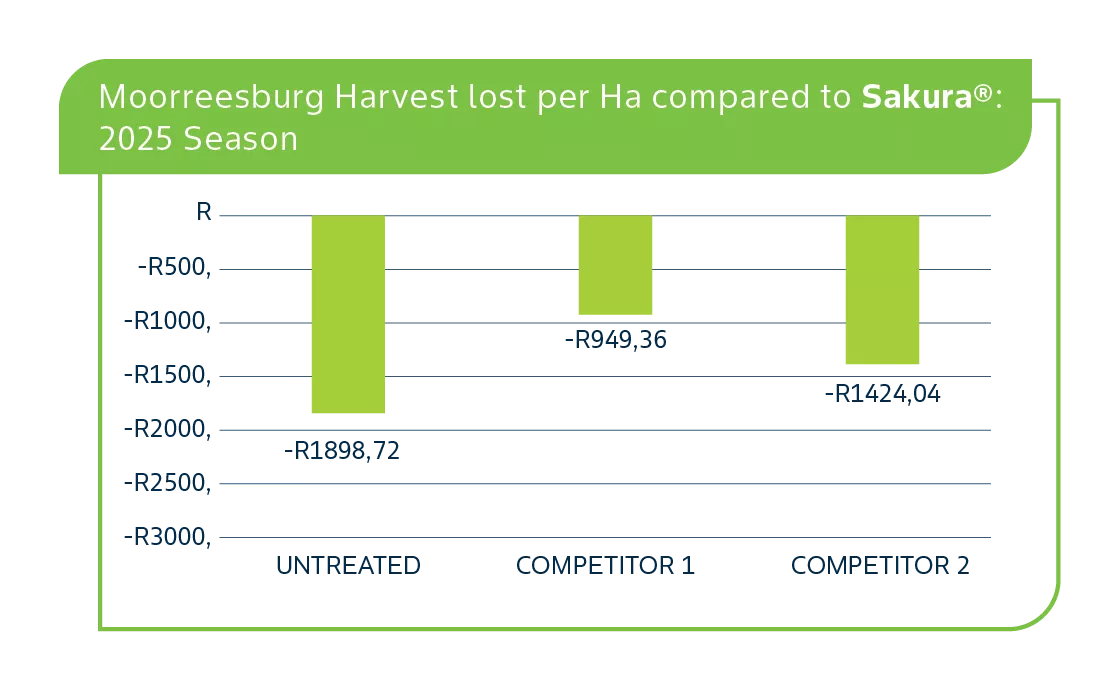
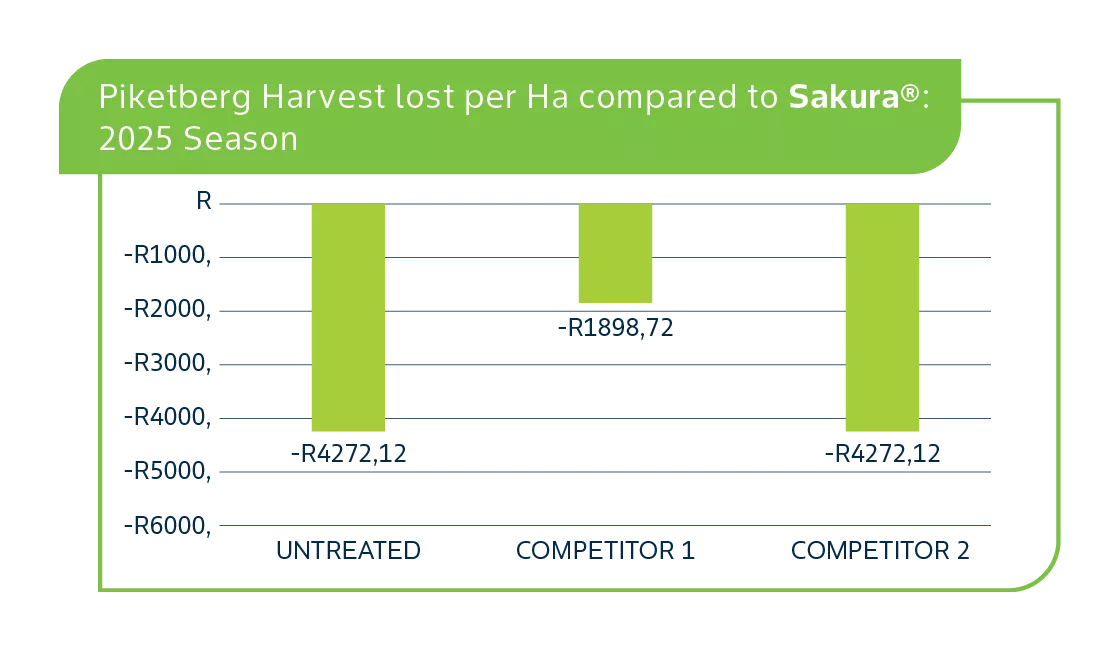
But what does this mean for the profitability of your farm? The improved control of Lolium has a direct correlation to the yield potential of your crops. When reviewing the 2025 harvest data from Piketberg and Moorreesburg, the yield advantage of using Sakura® herbicide becomes even more evident. Not only does Sakura® deliver higher tons per hectare, but it also drives a noticeable increase in overall yield percentage, giving crops a stronger performance from the outset. In contrast, fields treated with the competitors show greater yield losses per hectare, underlining the cost of weaker, less consistent weed control.

Moorreesburg Harvest .pngPiketberg Harvest.png
Moorreesburg Harvest 2.pngPiketberg 2.png

Please note that the current B2 price (ton/ha) was calculated at R4 746.80.

KEEPING THE SEED BANK CLEAN

One of the secrets to Sakura®’s efficacy, is its ability to keep the seed bank clean. By preventing seed build-up, farmers can reduce long-term weed pressure, improve control effectiveness, and protect crop yields over time.

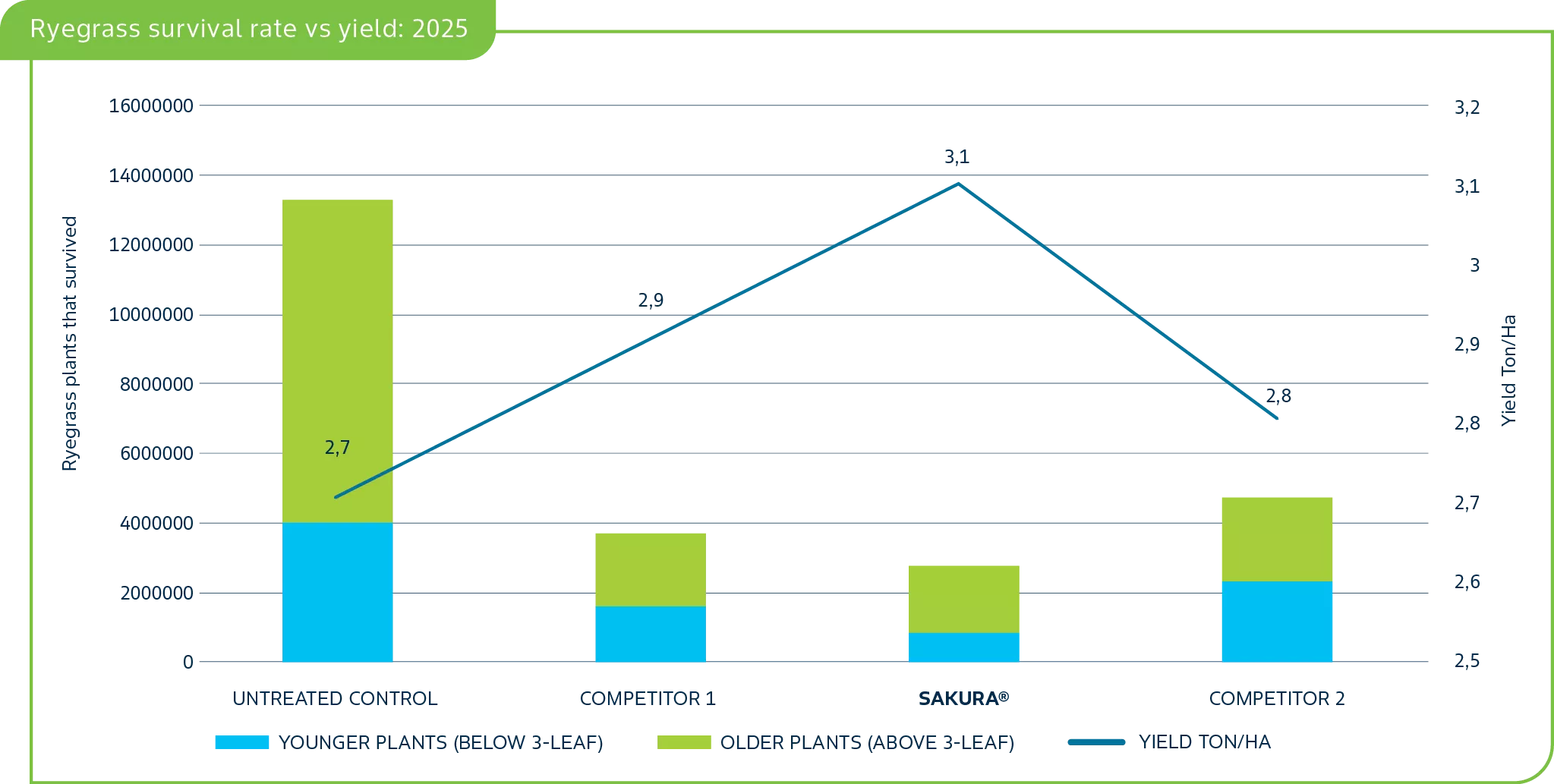
In two 2025 trials, the number of surviving Lolium plants was measured after treatment. Where no control was applied, 765 plants per m² survived, while competitor 1 had 41 plants per m² and competitor 2 had 56 plants per m² remaining.

Even these seemingly low numbers can be a major problem, as each plant can produce around 1 000 seeds, meaning 41 plants can release nearly 41 000 seeds and 56 plants over 56 000 seeds, rapidly increasing the seed bank in the soil.


KEEP FIELDS CLEANER FOR LONGER

In addition, Sakura® offers extended residual activity in the soil, meaning it continues to control successive flushes of ryegrass for longer than many standard pre-emergence options. Compared to its competitors, this consistent, long lasting performance ensures more reliable control throughout the season.

In two trials conducted in 2025, the control of older and younger weed plants was tested as well as the yield benefit it provided. One of the key takeaways from these trials was the consistent, long-lasting control provided by Sakura®. It effectively controlled both younger and older weeds throughout the season, reducing multiple flushes and keeping fields cleaner for longer. This shows that Sakura® has extended residual activity, giving crops ongoing protection and helping them grow without repeated competition from emerging weeds.

Ryegrass.png

What other control measures should you put in place?

START CLEAN AND STAY CLEAN: EFFECTIVE PRE-BURNDOWN

To ensure the efficacy of Sakura® as a pre-emergence herbicide, it is important to reduce weed pressure from the onset by applying a pre-burndown application. Weed species with high genetic diversity tend to develop resistance relatively quickly, and to different herbicide modes of action. Weedy ryegrasses have this inclination.

Control measures should start as early as possible, such as herbicide burndown applications before crop planting. Roundup® (glyphosate) and paraquat remain stalwarts in this regard, especially with their “double-knockdown” approach, whereby glyphosate is applied first, followed by paraquat if there are escapees.


CROP ROTATION SYSTEMS

In addition to chemical control, crop rotation is an effective and sustainable strategy for managing Lolium in wheat systems. By alternating wheat with crops that have different growing patterns, planting times, and herbicide options, farmers can disrupt the life cycle of ryegrass and reduce its ability to establish and spread. Rotations that include broadleaf crops, for example, allow for the use of alternative herbicide practices that are not possible in wheat, helping to control resistant ryegrass populations.


Effective ryegrass control starts with the right strategy and the right tools in place from day one. By combining proven solutions like Sakura® with sound management practices, farmers can protect their crops, reduce long-term weed pressure, and secure more consistent yields.


For more information, please contact your local Bayer representative.

Sakura® Reg. No. L9082 (Act No. 36 of 1947). Contains 850 g/kg Pyroxasulfone (pyrazole). Dangerous. Hazard statements: Causes damage to organs (liver, kidney, urinary bladder, cardiovascular system) through prolonged or repeated exposure if swallowed. Very toxic to aquatic life with long-lasting effects. READ THE LABEL BEFORE USE.

The registration owner of Sakura® is Bayer AG. Bayer (Pty) Ltd. Reg. No. 1968/011192/07. Collaboration Hub, First Floor, Waterfall Circle, 9 Country Estate Drive, Waterfall City, Midrand, 2090. Sakura® is a registered trademark of Kumiai Chemical Industry Co. Ltd.